olpopongiadventure.com

Home › Trekking in Tanzania

Every mountain, trail and walk worth doing

Trekking in Tanzania

Mount Kilimanjaro, Mount Meru and other adventurous trails, led by professional mountain guides. Check your fitness first, then pick the route that fits you.

  • 14mountains and trails
  • 5,895 mUhuru Peak
  • 7summit routes compared

Mountains and trails across Tanzania

Kilimanjaro is the headline, but the whole country is walking territory: volcanoes, crater rims, misty hills and chimpanzee forests. Mix them for a longer trip, or use one to prepare for the big climb.

7xm6815a82b13202Kilimanjaro Strenuous 5–9 days.Kilimanjaro

5,895 M · ROOF OF AFRICA

Kilimanjaro

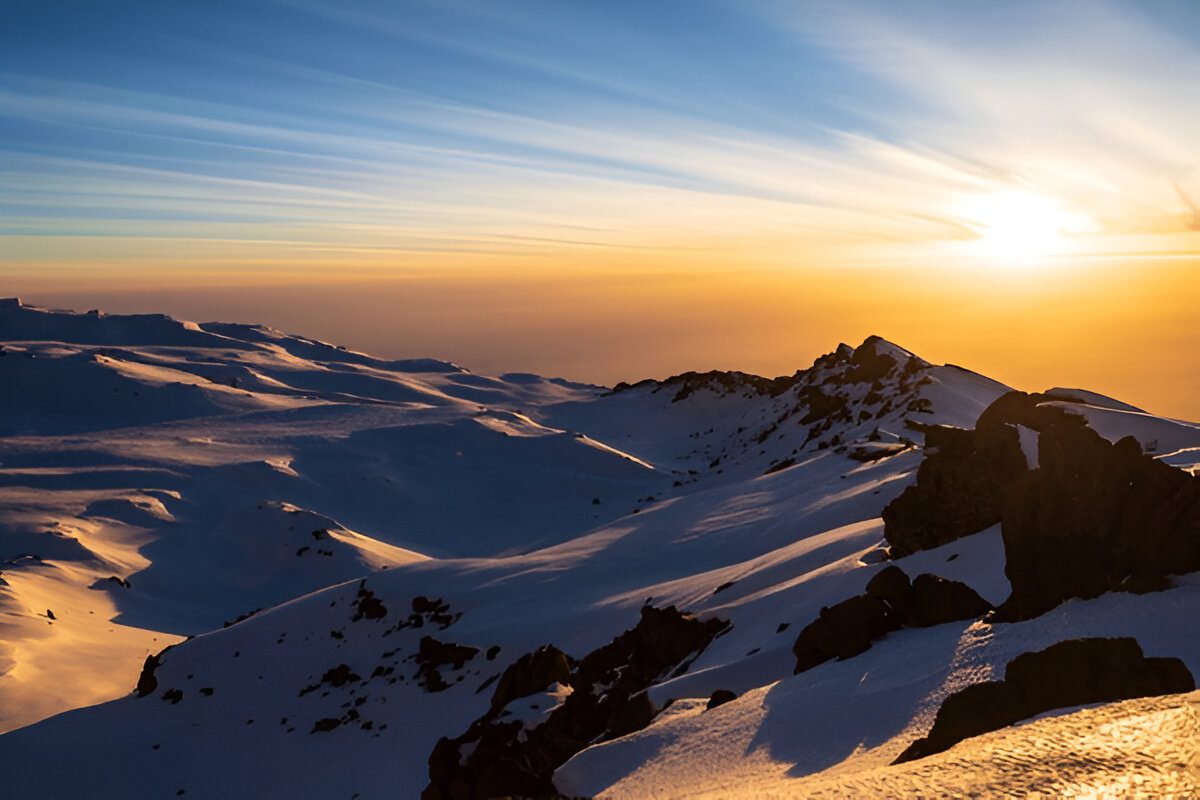
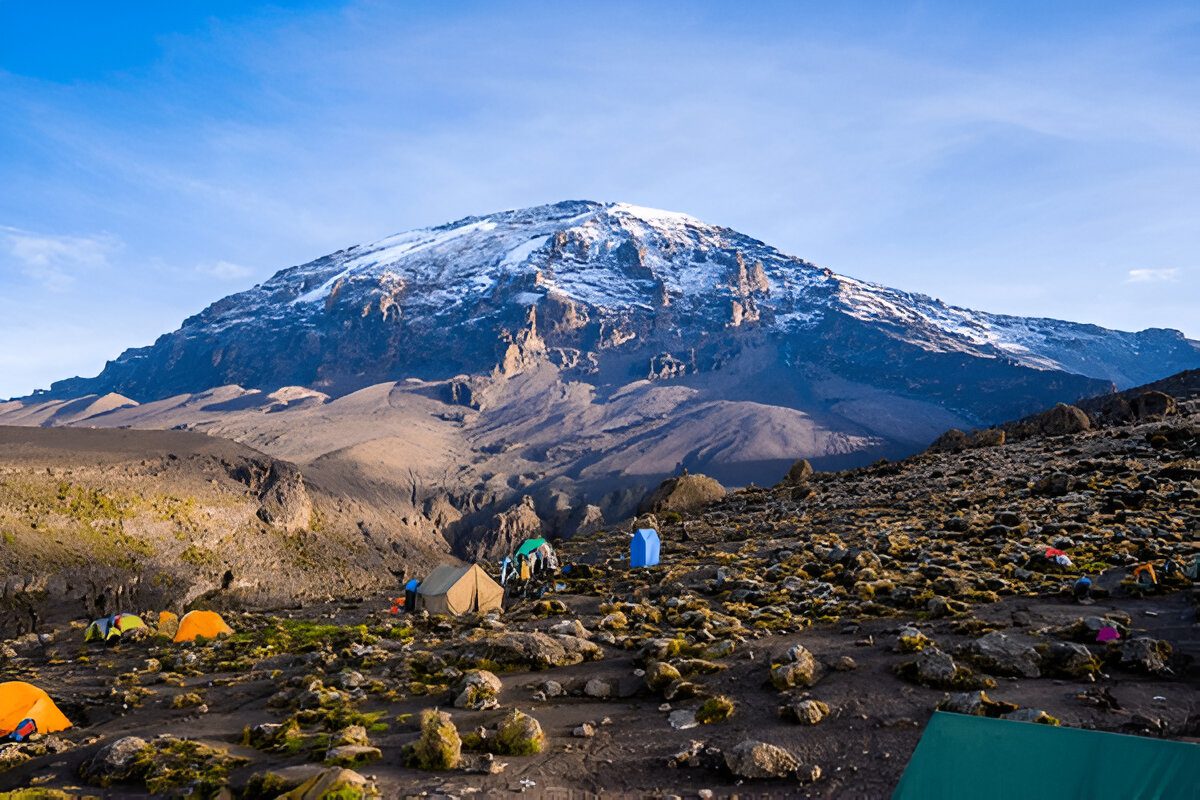
Africa’s highest mountain and the world’s tallest walkable peak. Six routes through rainforest, moorland and alpine desert, ending at Uhuru Peak at sunrise.

Good for First big mountain, or a lifetime goal. Pick the longest route you can.

Best months Jan–Mar, Jun–Oct

7xm6815a82b13202Mount Meru Strenuous 3–4 days.Mount Meru

4,566 M · ARUSHA NATIONAL PARK

Mount Meru

Tanzania’s second-highest peak. You walk with an armed ranger through buffalo and giraffe country, then climb a sharp ridge to the summit at dawn.

Good for A warm-up before Kilimanjaro, or a real summit in a short time.

Best months Jun–Oct, Dec–Feb

7xm6815a82b13202Ol Doinyo Lengai Very steep 1 night.Ol Doinyo Lengai

ABOUT 2,960 M · LAKE NATRON

Ol Doinyo Lengai

The “Mountain of God” is an active volcano. You start around midnight and climb a loose, steep cone before the sun gets hot, then look over Lake Natron at sunrise.

Good for Fit, sure-footed hikers who want something wilder than a trail.

Best months Jun–Oct

7xm6815a82b13202Mount Hanang Moderate 1–2 days.Mount Hanang

ABOUT 3,417 M · MANYARA REGION

Mount Hanang

Tanzania’s fourth-highest mountain, rising alone from the plains near Katesh. A steady walk through farmland and forest to the crater rim, with far views in every direction.

Good for Strong walkers who want a high summit without the crowds.

Best months Jun–Oct, Jan–Feb

7xm6815a82b13202Empakaai & Olmoti craters Moderate 1 day.Empakaai & Olmoti craters

NGORONGORO HIGHLANDS

Empakaai & Olmoti craters

Walk the rim of a crater lake and down to its floor, in Maasai country high above the plains, with views that most safari visitors never see.

Good for Walkers who want a different side of the Ngorongoro area.

Best months Jun–Oct, Jan–Feb

Blue waters chemka hot spring kilimanjaro tanzania u nichikayoshida.jpgArusha National Park walk Easy 1 day.Arusha National Park walk

WALKING SAFARI

Arusha National Park walk

On foot with a ranger past the Ngurdoto crater, waterfalls and the colobus monkeys of the forest, with Meru and Kilimanjaro often both in view.

Good for A gentle first day, or a rest-day outing between harder trips.

Best months All year

7xm6815a82b13202Kilimanjaro day hike Moderate 1 day.Kilimanjaro day hike

UP TO ABOUT 2,700 M

Kilimanjaro day hike

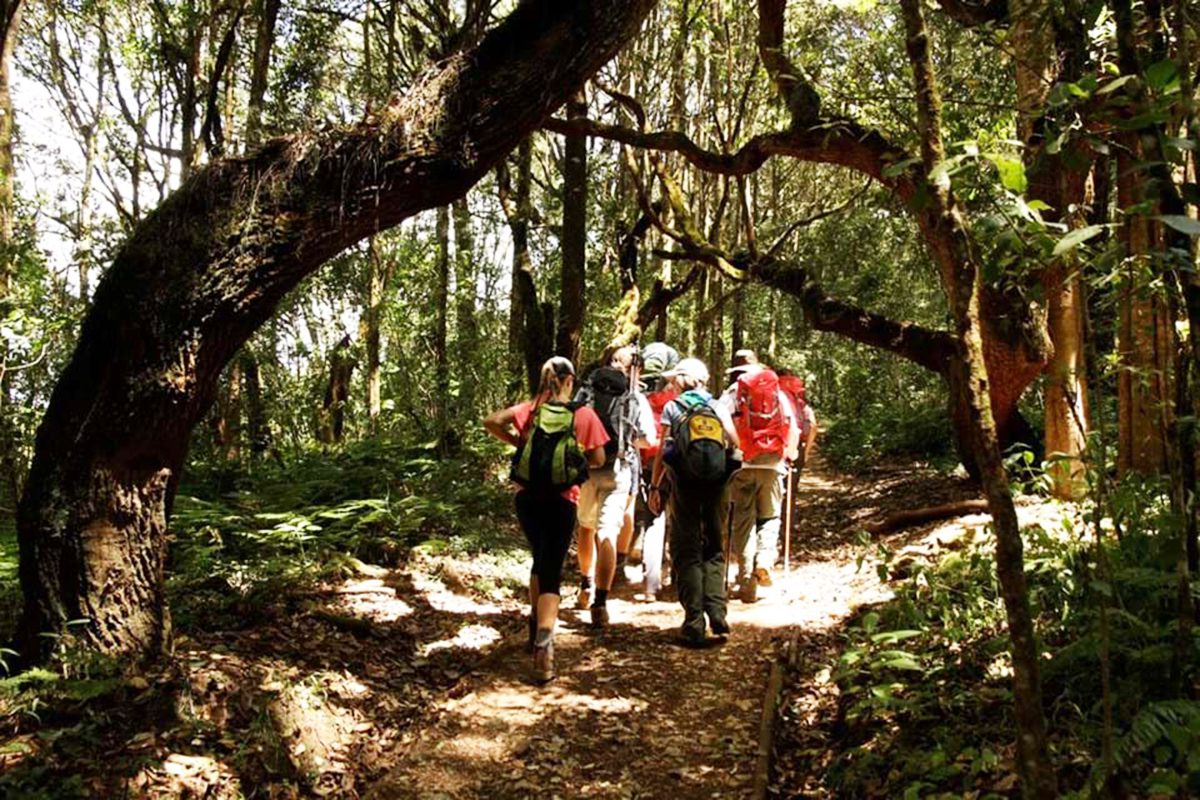
Walk through the rainforest to the first hut and back with a guide, with monkeys, birds and the mountain above you. A real taste of Kilimanjaro with no commitment.

Good for Families, first-timers and anyone short on time.

Best months All year

MateruniMateruni waterfalls & Chemka Easy 1 day.Materuni waterfalls & Chemka

MOSHI · KILIMANJARO FOOTHILLS

Materuni waterfalls & Chemka

A village walk to a tall waterfall, a coffee tasting made the old way, then a soak in the clear blue pool of the Chemka hot spring.

Good for A relaxed rest-day for climbers and a lovely family day.

Best months All year

7xm6815a82b13202Usambara Mountains Easy to moderate 1–4 days.Usambara Mountains

LUSHOTO · WESTERN USAMBARA

Usambara Mountains

Cool, green mountains of villages, forest paths and sudden viewpoints over the plains. Walk from one village to the next, from a few hours up to several days.

Good for Slow, scenic walking and local culture, with no altitude worries.

Best months Jun–Oct, Jan–Feb

7xm6815a82b13202Pare Mountains Easy to moderate 1–3 days.Pare Mountains

MWANGA · SAME

Pare Mountains

Quiet mountains of terraced farms, forest and rocky lookouts, with Kilimanjaro on the horizon. Walk with a local guide from village to village.

Good for Off-the-beaten-track hiking and cultural walks.

Best months Jun–Oct, Jan–Feb

7xm6815a82b13202Rungwe & Kitulo Plateau Moderate 2–3 days.Rungwe & Kitulo Plateau

ABOUT 2,980 M · SOUTHERN HIGHLANDS

Rungwe & Kitulo Plateau

Climb the forested volcano of Mount Rungwe, then walk the high Kitulo Plateau, where wild flower fields come into bloom from about November to April.

Good for Flower lovers, birders and hikers who want an unhurried trip away from the north.

Best months Nov–Apr for flowers

7xm6815a82b13202Udzungwa Mountains Moderate 1–3 days.Udzungwa Mountains

UDZUNGWA MOUNTAINS NATIONAL PARK

Udzungwa Mountains

Steep rainforest full of monkeys and birds found nowhere else. The Sanje Falls trail climbs steadily to a very tall waterfall, and longer treks go higher into the forest.

Good for Wildlife lovers who prefer boots to a vehicle.

Best months Jun–Oct

7xm6815a82b13202Mahale chimpanzee trek Moderate 3–5 days.Mahale chimpanzee trek

MAHALE MOUNTAINS · LAKE TANGANYIKA

Mahale chimpanzee trek

Track wild chimpanzees on foot through the forested slopes beside Lake Tanganyika. A remote and unforgettable trek, a long way from anywhere.

Good for Travellers who want a true wilderness experience.

Best months Jun–Oct

Heights are approximate and conditions change with the season. We confirm every detail when you enquire.

Kilimanjaro: pick your way up

Same mountain, very different walks. Longer routes give your body more time to adapt, which is the single biggest reason people reach the top.

* Typical summit rates quoted by operators for the longer version of each route. They are a guide, not a promise: weather, health and pace decide on the day.

Compare the routes side by side

LemoshoMachameNorthern CircuitRongaiMaranguUmbweMount Meru
Days7–86–796–75–65–63–4
SleepingCampingCampingCampingCampingHutsCampingHuts
Start height2,100 m1,640 m2,100 m1,950 m1,880 m1,600 m1,500 m
Summit rate*~90%~75%~95%~80%~65%~60%~80%
Challenge
Scenery
Quiet trail
Adapts well
Watch out forThe most expensive of the common routes because of the extra days and the long drive to the gate.Busy on the trail and at camp. The 6-day version is quick; the 7-day version is the one we would choose.Nine days off work and the highest cost. The last camp before the summit is a big jump.You come down the busier Marangu side, so the scenery is a little less varied.Up and down the same path, busy, and the quick climb makes altitude the main risk. Always take the rest day.We do not recommend it for a first Kilimanjaro. Poor adaptation if done in 5 days.Steep and exposed near the top, and a big jump up to Saddle Hut. Do not treat it as an easy walk.

Our trekking itineraries

Day-by-day plans with prices. Tap one for the full itinerary, or ask us to tailor it.

7xm680112984485f Walking African safaris7xm.xyz4332407xm.xyz383172

Walking African safaris · Arusha National Park · Tarangire National Park · +4

Walking African safaris

Step Into the Wild: Walking African Safari Adventures Forget the wheels.

  • Jan: good
  • Feb: good
  • Mar: good
  • Apr: quieter
  • May: quieter
  • Jun: prime time
  • Jul: prime time
  • Aug: prime time
  • Sep: prime time
  • Oct: prime time
  • Nov: good
  • Dec: good
Ask for a price View itinerary

Hiking day trips

Short walks you can add to a safari or fit around a climb.

The readiness lab

Five quick tools to judge your own fitness, choose a route, understand altitude and get packed. Nothing is stored or sent unless you choose to message us.

A 3-minute step test you can do at home

  1. Find a sturdy step or bench about 30 cm (12 in) high.
  2. Step up and down at a steady beat of 24 steps a minute (up-up-down-down) for 3 minutes. Set a metronome to 96 beats.
  3. Stop, sit down at once, and count your pulse for one full minute.
  4. Enter your age and that pulse below.

This is a rough self-check of how fast you recover, not a medical test. Stop if you feel dizzy, faint or have chest pain.

How to judge any trek operator

Use this list with us or anyone else. A good operator answers all of it plainly.

  • How many days is the route? Seven or more for Kilimanjaro gives far better odds than five.
  • Do guides check oxygen and pulse every day? A pulse oximeter morning and night is standard, and guides should be trained in altitude illness.
  • Is there emergency oxygen and a rescue plan? Ask exactly who carries it and how a descent works.
  • How are porters treated and paid? Look for fair wages, weight limits, proper gear and a clear tipping guide.
  • What is the group size and guide ratio? Small groups with a guide for every few hikers let the pace match each person.
  • Is the licence real? Ask for the operator’s Tanzanian licence and check it.

Questions we hear most

How hard is Kilimanjaro?

There is no climbing: it is a long, steady walk at altitude. What makes it hard is the thin air, the cold summit night and the length of the days. Fitness helps, but the biggest factor is how slowly you go and how many days you give your body to adapt.

What are the chances of reaching the top?

It depends mostly on the route length. Seven to nine day routes are commonly quoted at 85 to 95 percent, and five-day routes noticeably lower. Nobody can promise the summit, and a good guide will turn you around if it is not safe.

What is altitude sickness and how do I avoid it?

It is your body struggling to adapt to less oxygen: headache, nausea, poor sleep. You lower the risk by choosing a longer route, walking slowly, drinking well, and sleeping lower than your highest point of the day. If symptoms get worse, you go down. That is the one rule that never changes.

Which month is best?

January to March and June to October are the dry seasons. July to September are the clearest and busiest; February and the shoulder months are quieter. April, May and November are the rains.

Can children or older people climb?

The park sets a minimum age of 10. Older hikers do very well on longer routes, and we would pick a slower, longer route and ask for a doctor’s opinion first. For young children, look at Meru, the day hike or the hot-spring walk instead.

Which trek should I start with?

If you are new to altitude, Mount Meru or a longer Kilimanjaro route are the usual choices, and the day hikes and village walks need no experience at all. Tell us how much time and fitness you have and we will suggest one.

Do I need to be an experienced hiker?

No technical skill is needed. You do need to be comfortable walking for 6 to 8 hours with a day pack, and to have trained for it. Use the readiness check on this page to see where you stand.

Talk to a guide

Tell us your dates, your fitness and who is coming. We reply with a route, a plan and a price, usually within a few hours.

WA